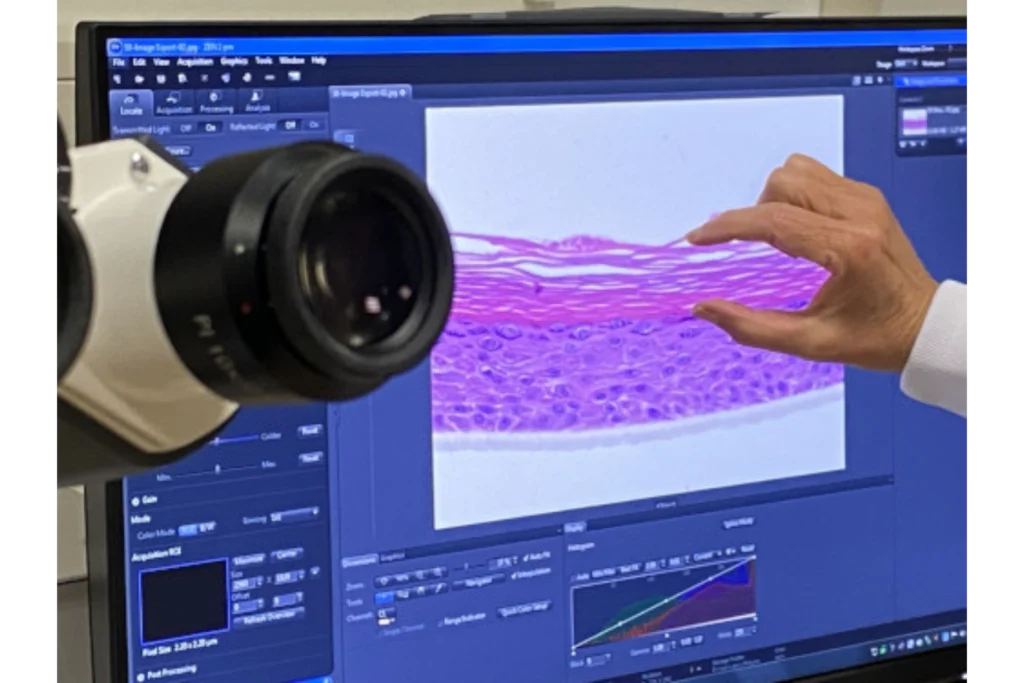
Barrier integrity is a crucial factor in assessing the quality and safety of cosmetic products. It determines how well a product interacts with the skin and its ability to protect against external aggressors. A compromised skin barrier can lead to issues such as irritation, dryness, and increased sensitivity. Therefore, accurate measurement of barrier integrity is essential for developing products that are both effective and gentle on the skin.
Locsense will be attending The European Respiratory Society Congress (ERS), which will be held in Vienna, on September 7 - 11, 2024. For more information, click here. Stop by the Locsense booth to meet our experts and watch live demos. We look forward to seeing you in Vienna.
Researchers from the Radboudumc and Locsense developed an approach to measure how genetic variants, inflammatory mediators, and drug candidates affect skin barrier development and function. The article is now in press in the Journal of Investigative Dermatology. The quantitative and longitudinal analysis of epidermal differentiation and skin barrier function in skin organotypic models was monitored.…
Locsense will be exhibiting at the 22nd International Congress of the European Society of Toxicology In Vitro (ESTIV 2024). The congress will take place in the historic and picturesque city of Prague from June 3rd to 6th, 202412. Booth Number: 10 Why Visit Our Booth? For more information about the congress, visit the ESTIV 2024…
Locsense exhibitor at the SOT ToxExpo in Salt Lake City Locsense will exhibit at the 70th SOT Annual meeting and ToxExpo in Salt Lake City, Utah which will be held from the 10-14th of March 2024. The Society of Toxicology promotes the acquisition and utilization of knowledge in toxicology and aids in the protection of…
Innovative skin sensing for drug and cosmetic compounds testing Locsense, StratiCELL and the Radboudumc are proud to announce Eurostars funding supporting the development of a breakthrough Epithelial Sensing solution that accurately measures the barrier function of new in-vitro skin constructs, closely resembling the in-vivo situation. The platform assesses skin barrier function in a non-intrusive manner…
Skin barrier assessment at the E2BRN conference Felicitas Pardow and Jos P.H. Smits from the Radboudumc will present their findings on how impedance spectroscopy provides insight in epidermis formation and skin barrier function in vitro in Edinburgh. Locsense is proud sponsor of the E2BRN (the Epidermal Barrier Research Network) conference on the 28th and 29th …
Locsense exhibitor at the Eurotox conference Meet us at the Eurotox conference, in the Ljubjana exhibition and convention center, which will be held from the 10th till the 13th of September 2023. For more details check the Eurotox 2023 website via the following link: https://www.eurotox2023.com/. Stop by our booth to learn more about our in-vitro…
Meet us at the MPS world summit in Berlin from 26th till the 30th of June. Find the latest results on blood-brain-barrier on chip development with impedance measurements for quality control presented by Robin Pampiermole from the Applied Stem Cell Technologies (AST) research group at the University of Twente. See poster number 92.
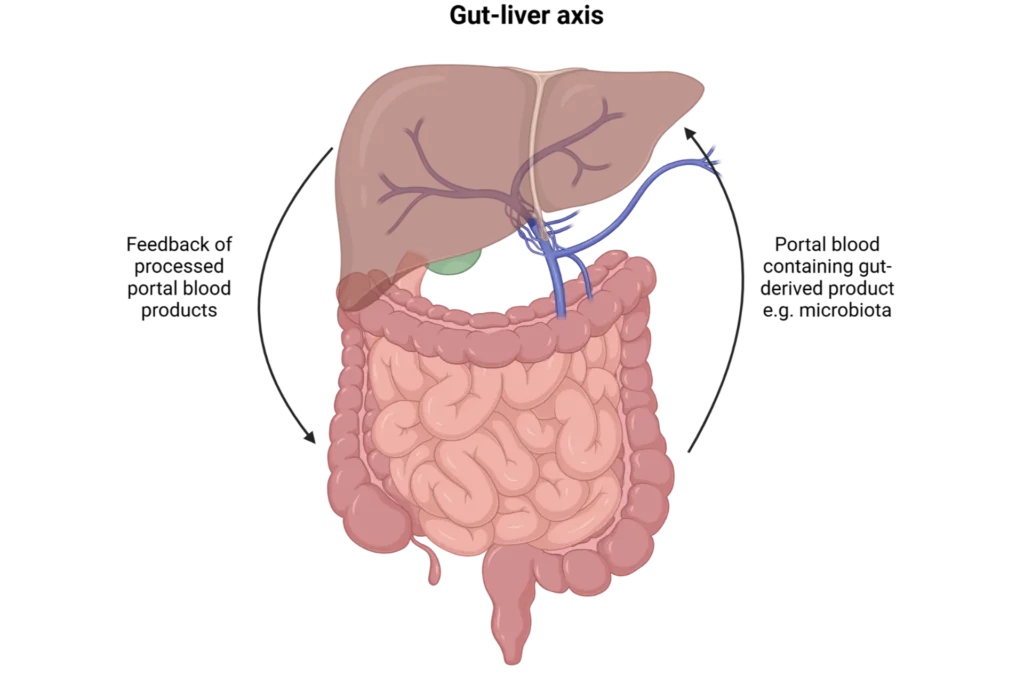
The development of a highly representative in vitro gut-liver model is essential for improving drug testing accuracy while minimizing the reliance on animal studies. Traditional animal models often fail to fully replicate human physiology, leading to discrepancies in drug metabolism and toxicity predictions.1 A physiologically relevant gut-liver system would provide a more accurate platform to…
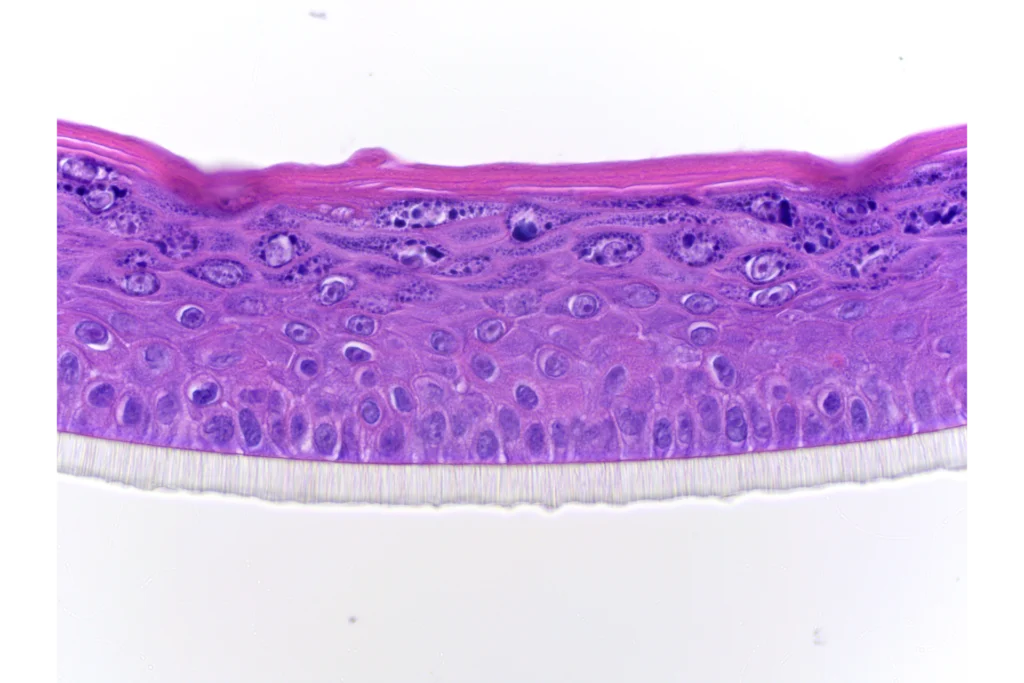
For research into skin biology, diseases, and drug or chemical interactions, organotypic 3D human epidermal equivalents (HEEs) are frequently used. Studies heavily rely on end-points analysis for which HEEs are harvested to study cellular responses. Non-intrusive methods that enable longitudinal analysis by repetitive measurements can minimize batch effects, increase study reproducibility and maximize experimental throughput.…
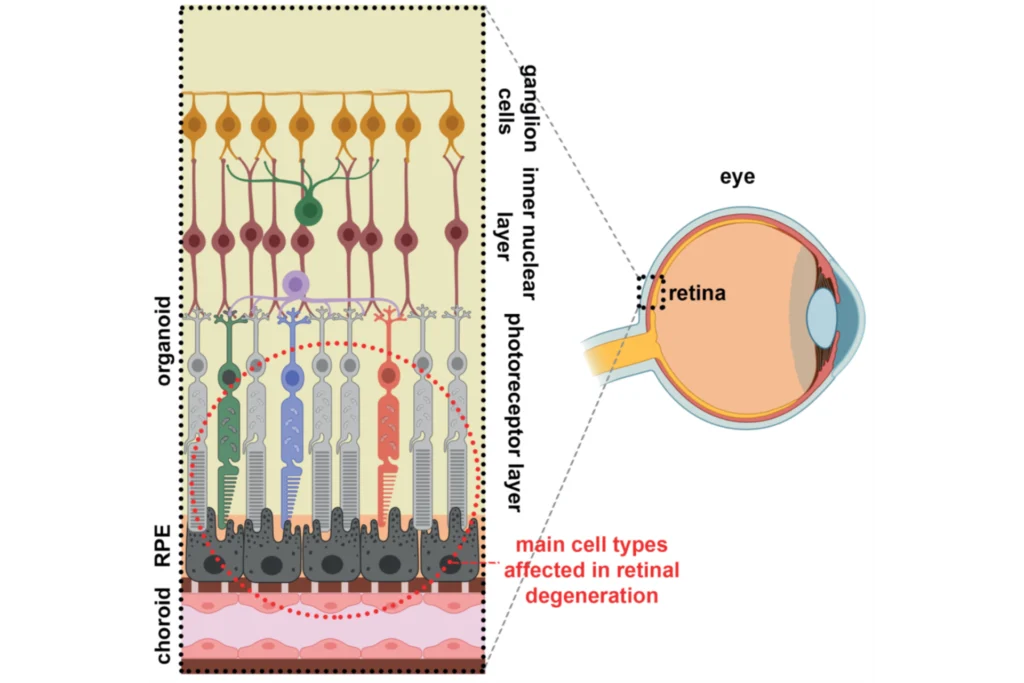
The human rena is a highly organized structure consisng of neural rena, renal pigment epithelial (RPE)cell layer, and vasculature, called the choroid (Figure 1). Current human cell models oen lack three-dimensional (3D) complexity of the human rena. Renal diseases lead to photoreceptor cell death, causing progressive blindness (1). We are invesgang two parcular renal diseases:…
For research into skin biology, diseases and drug or chemical interactions, organotypic 3D human epidermal equivalents (HEEs) are frequently used. Studies heavily rely on endpoints analysis for which HEEs are harvested to study cellular responses. Non-intrusive methods that enable longitudinal analysis by repetitive measurements can minimize batch effects, increase study reproducibility and maximize experimental throughput.…
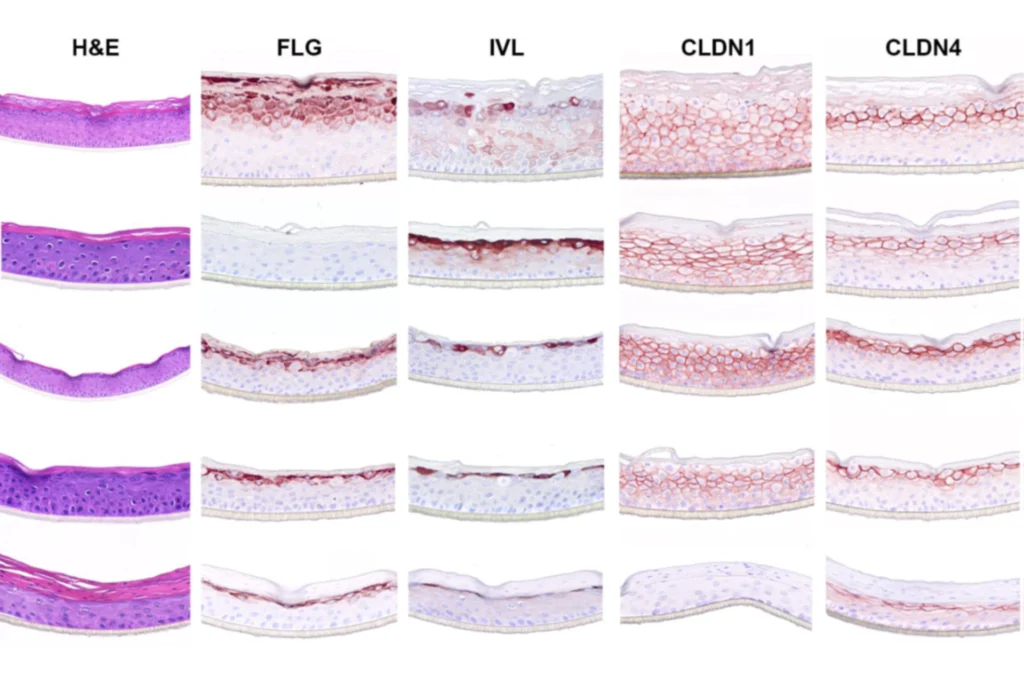
Ever since the association between FLG loss-of-function variants and ichthyosis vulgaris and atopic dermatitis disease onset was identified, FLGs function has been under investigation. Intraindividual genomic predisposition, immunological confounders, and environmental interactions complicate the comparison between FLG genotypes and related causal effects. Using CRISPR/Cas9, we generated human FLG-knockout (DFLG) N/TERT-2G keratinocytes. FLG deficiency was shown…
The aryl hydrocarbon receptor (AHR) is an evolutionary conserved environmental sensor identified as indispensable regulator of epithelial homeostasis and barrier organ function. Molecular signaling cascade and target genes upon AHR activation and their contribution to cell and tissue function are however not fully understood. Multi-omics analyses using human skin keratinocytes revealed that, upon ligand activation,…
3 D human epidermal equivalents (HEEs) are a state‐of‐the‐art organotypic culture model in preclinical investigative dermatology and regulatory toxicology. Here, we investigated the utility of electrical impedance spectroscopy (EIS) for non–invasive measurement of HEE epidermal barrier function. Our setup comprised a custom–made lid fit with 12 electrode pairs aligned on the standard 24–transwell cell culture…
The skin serves as an integral barrier between an organism and harmful external stimuli such as allergens, chemicals and infectious agents. Keratinocytes (KC), the primary cell of the epidermis, differentiate to form the stratified squamous epithelia responsible for the structure and barrier function of the skin.