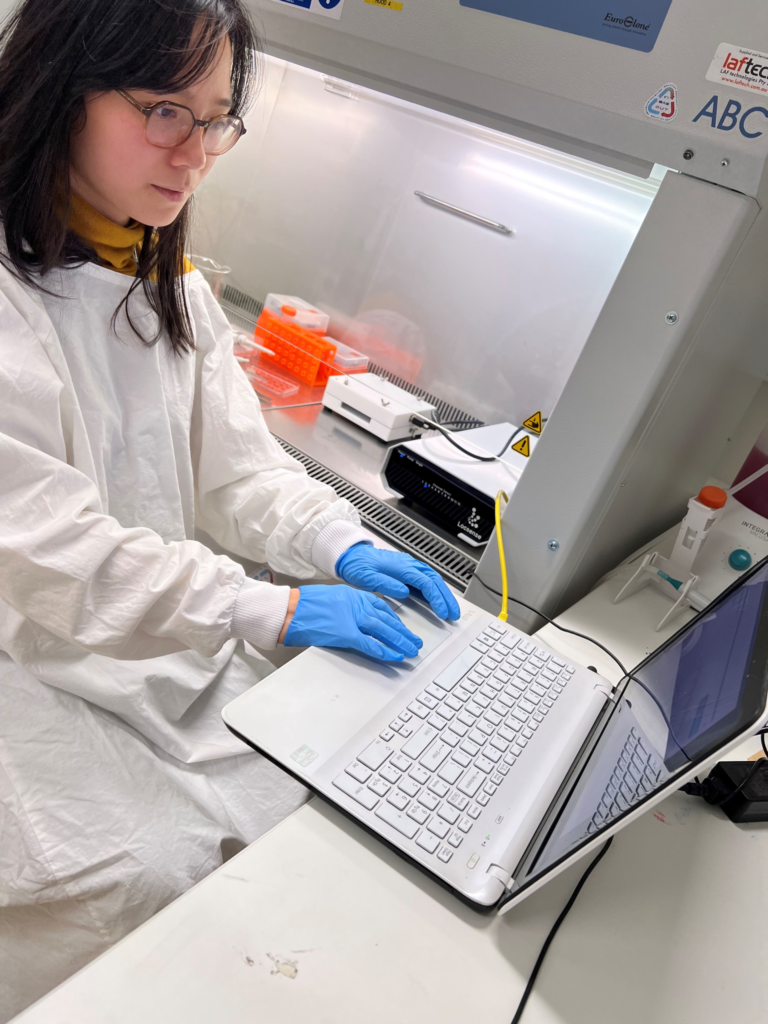
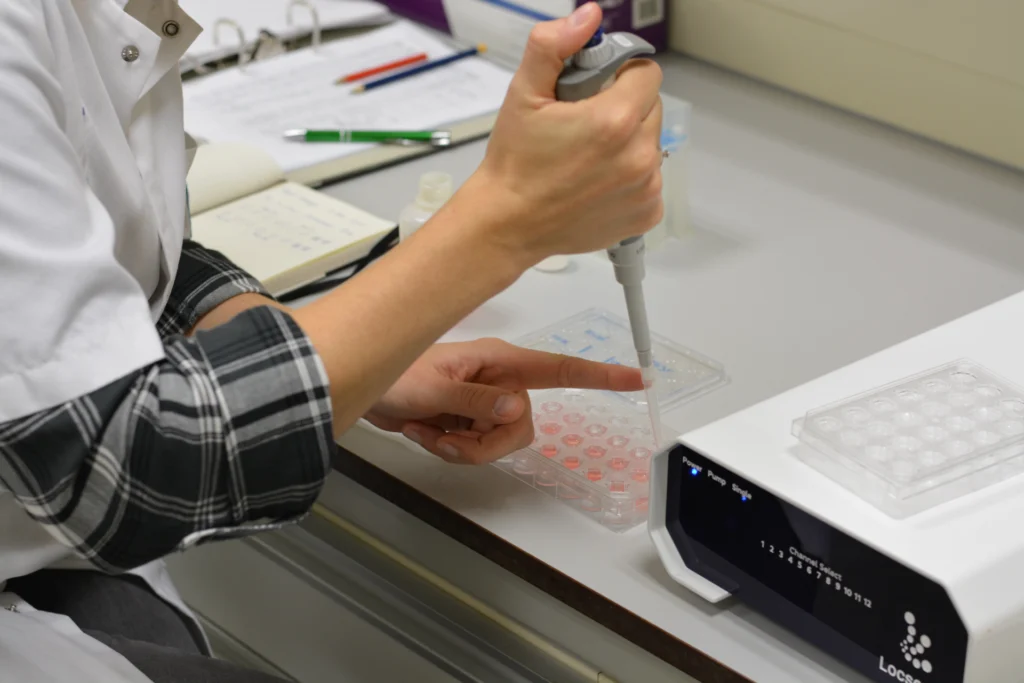
Founded in 2016, Locsense develops non-invasive sensors like the Artemis to monitor cell health, offering a cruelty-free alternative to animal testing. Its technology measures cell barrier strength, crucial for drug testing, disease research, and understanding body defenses. Locsense devices integrate seamlessly with existing workflows and advanced in-vitro platforms like organ-on-chip and microfluidic chips.
Locsense exhibitor at the Eurotox conference Meet us at the Eurotox conference, in the Ljubjana exhibition and convention center, which will be held from the 10th till the 13th of September 2023. For more details check the Eurotox 2023 website via the following link: https://www.eurotox2023.com/. Stop by our booth to learn more about our in-vitro…
Major step forward in alternatives to animal models for lung cells! Read the latest impactful results on in-vitro lung-models for accelerated drug discovery from our collaborators in Sydney, published in Biomaterials Research. The developed in-vitro models enable therapeutics development for COPD as well as assessment of effects of pollution on lungs. Congratulations on the great…
At the ESDR (European Society for Dermatological Research) conference in Amsterdam sept 2022, Noa van den Brink presented results on monitoring the barrier function of skin epithelial cells using electrical impedance spectroscopy. Read her conclusions below!
photo by Eric Brinkhorst. We are looking back at an inspiring Techmed Event at the University of Twente. Locsense was part of a panel discussion, lead by Constantijn Van Oranje-Nassau, about the challenges of building and scaling a medtech company. He interviewed four ceo’s of medtech companies at Kennispark Twente about the challenges that medtech companies…
Ever since the association between FLG loss-of-function variants and ichthyosis vulgaris and atopic dermatitis disease onset was identified, FLGs function has been under investigation. Intraindividual genomic predisposition, immunological confounders, and environmental interactions complicate the comparison between FLG genotypes and related causal effects. Using CRISPR/Cas9, we generated human FLG-knockout (DFLG) N/TERT-2G keratinocytes. FLG deficiency was shown…
Background Respiratory diseases are the 2nd leading cause of death globally. The current treatments for chronic lung diseases are only supportive. Very few new classes of therapeutics have been introduced for lung diseases in the last 40 years, due to the lack of reliable lung models that enable rapid, cost-effective, and high-throughput testing. To accelerate…
The aryl hydrocarbon receptor (AHR) is an evolutionary conserved environmental sensor identified as indispensable regulator of epithelial homeostasis and barrier organ function. Molecular signaling cascade and target genes upon AHR activation and their contribution to cell and tissue function are however not fully understood. Multi-omics analyses using human skin keratinocytes revealed that, upon ligand activation,…
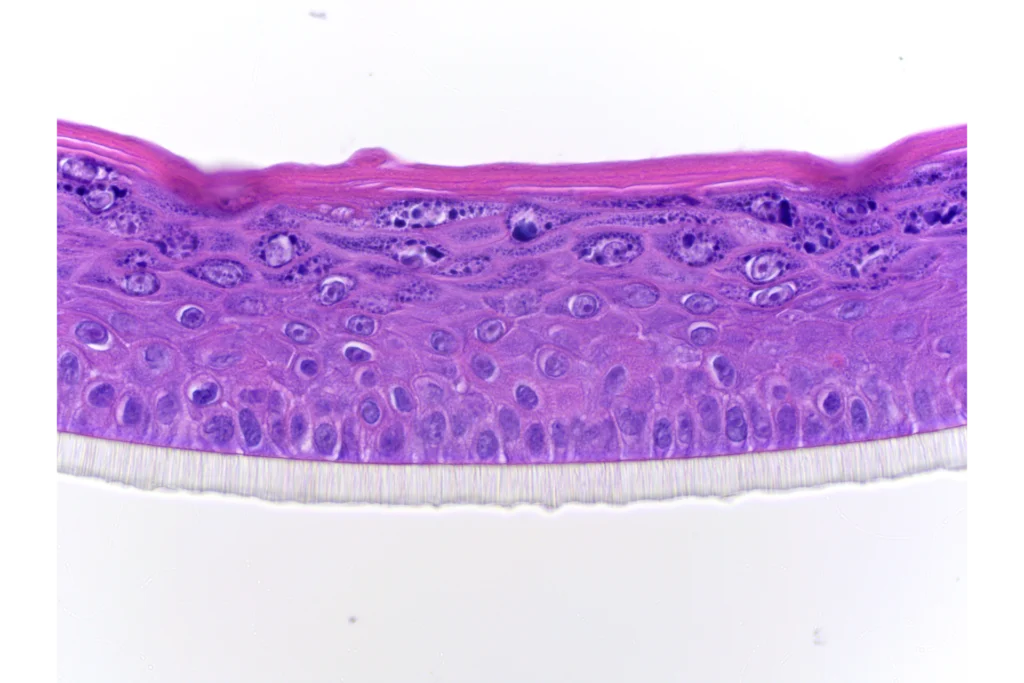
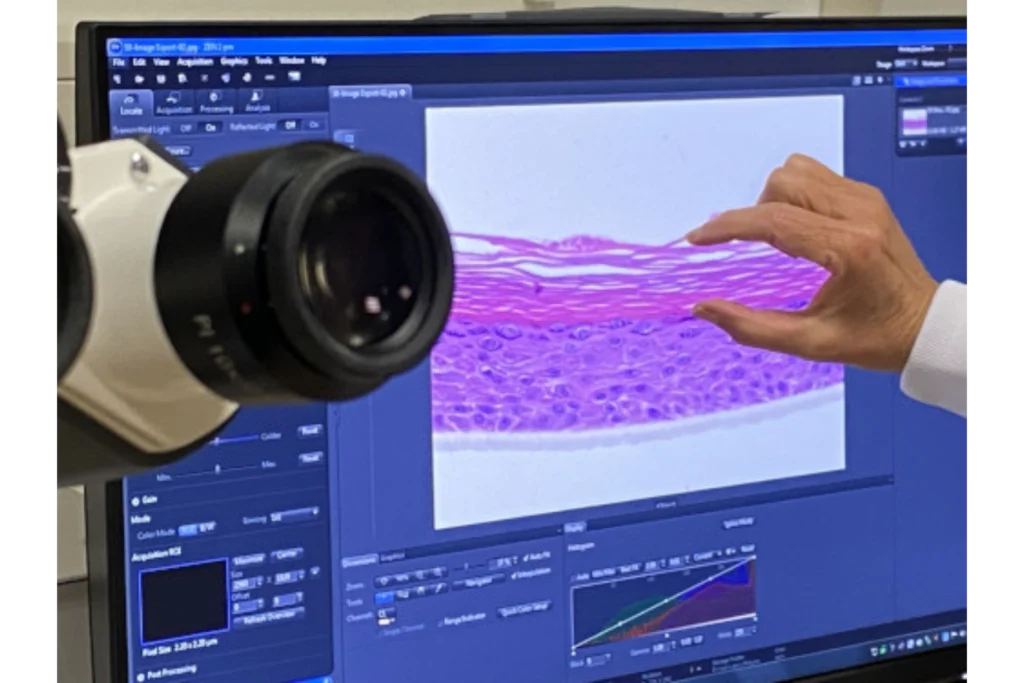
3 D human epidermal equivalents (HEEs) are a state‐of‐the‐art organotypic culture model in preclinical investigative dermatology and regulatory toxicology. Here, we investigated the utility of electrical impedance spectroscopy (EIS) for non–invasive measurement of HEE epidermal barrier function. Our setup comprised a custom–made lid fit with 12 electrode pairs aligned on the standard 24–transwell cell culture…
The skin serves as an integral barrier between an organism and harmful external stimuli such as allergens, chemicals and infectious agents. Keratinocytes (KC), the primary cell of the epidermis, differentiate to form the stratified squamous epithelia responsible for the structure and barrier function of the skin.